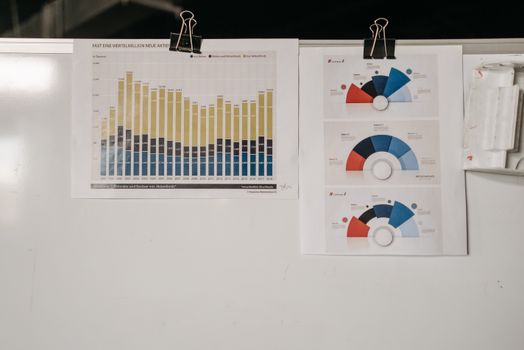
Big data is transforming the way organizations make decisions, spot trends, and gain insights. But as data volumes grow—reaching terabytes, petabytes, or even exabytes—the task of making sense of this information becomes increasingly complex. Traditional charts and static dashboards often fall short when analyzing millions or billions of data points. This is where advanced visualization techniques come into play. These methods help reveal hidden patterns, uncover relationships, and make big data truly actionable. In this article, we will explore how to use advanced visualization techniques for big data analysis, showcasing practical approaches, technologies, and real-world applications.
Why Advanced Visualization is Essential for Big Data
The rise of big data has created both opportunities and challenges. According to IDC, the amount of digital data created worldwide is projected to reach 175 zettabytes by 2025. With such massive volumes, traditional visualization techniques—like bar charts and line graphs—are often insufficient. Here’s why advanced visualization is indispensable:
- $1: Standard methods can’t effectively display or interact with billions of data points. - $1: Big data often contains multi-dimensional relationships that are hard to represent in simple visuals. - $1: In fast-paced sectors like finance or cybersecurity, real-time visualization is vital for timely insights.Advanced visualization techniques allow analysts to filter, drill down, and interact with data in ways that static visuals simply cannot. In short, these techniques turn overwhelming data sets into comprehensible, actionable intelligence.
.png)
Key Advanced Visualization Techniques for Big Data
Let’s delve into some of the most powerful visualization techniques designed specifically for big data analysis:
1. $1: These visuals display the density or intensity of data points using color gradients. For example, a global company might use a heatmap to see transaction volumes by region, instantly highlighting hotspots and anomalies. 2. $1: These are ideal for mapping relationships, such as social networks or supply chain connections. Network graphs can visualize millions of nodes and edges, revealing clusters and central actors that would be invisible in tabular data. 3. $1: When location is a key variable, geospatial analysis helps visualize data over maps, from tracking shipping routes to mapping disease outbreaks. Companies like Uber and FedEx rely on geospatial visualization to optimize logistics using real-time, location-based data. 4. $1: This method displays multi-dimensional data, with each variable represented as a vertical axis. Parallel coordinates are invaluable for detecting correlations in high-dimensional datasets, such as in genomics or financial portfolio analysis. 5. $1: These hierarchical visualizations break down large, nested data sets, such as organizational structures or file storage systems. They make it easy to spot patterns in proportions or identify dominant categories. 6. $1: Advanced dashboards allow users to interact with data, apply filters, and see changes in real time. Animation can also reveal trends over time, such as the spread of information on social media or changes in sales by hour.Each of these techniques addresses specific challenges in big data analysis that traditional visuals simply can’t match.
Tools and Technologies for Advanced Visualization
Selecting the right tool is crucial for leveraging advanced visualization techniques. Below is a comparison table of some leading platforms, highlighting their capabilities in handling big data and advanced visualizations:
| Tool | Big Data Support | Key Visualization Features | Integration | Best For |
|---|---|---|---|---|
| Tableau | High (with connectors) | Heatmaps, Geospatial, Interactive Dashboards | SQL, Hadoop, Spark, Cloud | Business Analytics |
| Power BI | Medium-High | Treemaps, Animated Dashboards, Custom Visuals | Azure, SQL, BigQuery | Enterprise Reporting |
| Apache Superset | Very High | Network Graphs, Geospatial, Custom Plugins | Hadoop, Presto, Druid | Open Source Big Data |
| Qlik Sense | High | Associative Data Model, Interactive Visuals | Cloud, On-Premises, APIs | Complex Data Exploration |
| D3.js | Depends (Developer-Driven) | Custom Charts, Animated Visuals | Web APIs, JSON, CSV | Custom Visualization Projects |
When dealing with truly massive data sets, cloud-based solutions or systems that natively connect to distributed storage (like Hadoop or cloud data lakes) are essential. For example, Apache Superset is designed to work natively with big data sources, while Tableau and Power BI offer robust connectors for cloud and on-premises databases.
Best Practices for Implementing Advanced Visualization
Adopting advanced visualization techniques for big data isn’t just about using the right tools; it also requires a thoughtful approach. Here are some best practices to ensure success:
- $1: Don’t visualize data just for the sake of it. Define the business question or hypothesis first. - $1: Too many filters or controls can overwhelm users. Focus on the most impactful interactions. - $1: Use data sampling, aggregation, or pre-processing to avoid slow load times. For instance, Google BigQuery can analyze billions of rows in seconds, but visuals should aggregate this information for clarity. - $1: Visualization can only be as good as the underlying data. Ensure data is clean, accurate, and up-to-date. - $1: An executive might need a high-level overview, while a data scientist may require granular drill-downs. Tailor visualizations to user needs. - $1: Collect feedback and refine your visuals. A/B testing different visualization types can reveal what works best for your audience.Following these practices will help you create visuals that are both insightful and actionable, rather than overwhelming or confusing.
Real-World Examples of Advanced Visualization in Action
To appreciate the impact of advanced visualization, let’s look at some real-world scenarios:
- $1: During the COVID-19 pandemic, organizations like Johns Hopkins University used interactive dashboards and animated geospatial maps to track global cases in real time. Their dashboard received over 1 billion requests per day at its peak in 2020. - $1: Investment firms use parallel coordinates and network graphs to analyze market correlations. For example, BlackRock processes over 100 million financial instruments daily and uses advanced visualization to monitor risk and spot anomalies. - $1: Amazon and Walmart analyze billions of customer interactions to optimize supply chains, pricing, and personalized recommendations. Heatmaps and treemaps help identify best-selling categories and emerging trends. - $1: Advanced network graphs help cybersecurity analysts detect anomalies and potential threats within vast logs of network traffic. In 2023, IBM’s QRadar platform processed up to 60 billion security events per day, using visualization to prioritize alerts.These examples illustrate how organizations across industries leverage advanced visualization not just to “see” data, but to drive critical business actions.
The Future of Big Data Visualization
The landscape of big data visualization is evolving rapidly. Artificial intelligence (AI) and machine learning (ML) are increasingly being integrated with visualization tools. For example, predictive analytics can highlight future trends or automatically detect anomalies, while natural language processing enables users to generate complex visuals with simple queries.
Another emerging trend is immersive visualization using virtual and augmented reality (VR/AR). Imagine exploring a 3D network of financial transactions or visualizing supply chain flows in a virtual warehouse. According to a 2023 Gartner report, by 2027, 50% of analytics queries will be generated via search, natural language, or voice.
Data democratization is also on the rise. As tools become more user-friendly and capable of handling big data, a wider range of professionals—from marketers to HR managers—can leverage advanced visualizations to make data-driven decisions.