Social networks—ranging from friendship circles to global online platforms—generate immense amounts of data about how individuals and organizations interact. Making sense of these complex webs of connections is vital for researchers, marketers, sociologists, and businesses alike. But raw data alone rarely tells the full story. This is where data visualizations become indispensable, transforming abstract relationships into clear, actionable insights. In this article, we explore the world of social network analysis (SNA) through the lens of data visualization, diving into practical examples, advanced techniques, and tips for getting the most from your network data.
Understanding Social Network Analysis and Visualization
Social network analysis (SNA) is the process of investigating social structures using networks and graph theory. In these networks, entities (like people, organizations, or accounts) are represented as nodes, while the connections between them (such as friendships, communications, or transactions) are edges or links.
As the datasets grow in size and complexity, traditional lists or spreadsheets quickly become insufficient for meaningful interpretation. Visualizations translate these sprawling networks into intuitive forms—such as node-link diagrams or heatmaps—that help users spot patterns, outliers, clusters, and influencers.
.png)
According to a 2023 study by Statista, over 4.9 billion people used social media worldwide, generating vast flows of interaction data daily. This explosion in connectivity makes effective visualization not just helpful, but essential for anyone seeking to understand or leverage social networks.
Popular Data Visualization Techniques in Social Network Analysis
There is no one-size-fits-all approach to visualizing network data. The technique you choose depends on the size of your network, the type of insights you’re seeking, and your audience. Here are some of the most widely used methods:
1. Force-Directed Graphs These are the most iconic visualizations for social networks. Nodes are positioned using algorithms that simulate physical forces, so connected nodes cluster together while unconnected ones repel each other. This layout highlights communities, central players, and bridges between groups. Tools like Gephi and Cytoscape specialize in such visualizations. 2. Adjacency Matrices Instead of visualizing nodes and edges spatially, adjacency matrices use a grid to show which nodes are connected. Each cell represents a relationship between two nodes. Matrices excel at revealing patterns in dense networks—such as subgroups or recurring interaction motifs—that can be hard to spot in tangled node-link diagrams. 3. Ego Networks Focusing on a single node (“ego”) and its immediate connections (“alters”), ego network visualizations clarify an individual’s direct influence and reach. They are particularly useful in marketing (identifying brand advocates) and organizational studies (mapping team interactions). 4. Geographic Network Maps When network data includes location information, overlaying connections on a map can reveal regional clusters, cross-border ties, or diffusion patterns (such as how information or diseases spread). For example, Twitter retweet networks mapped geographically can illustrate the viral journey of a hashtag. 5. Temporal Network Visualizations Relationships aren’t static. Animated or time-sliced visualizations show how networks evolve—how clusters form, dissolve, or how key players emerge and fade. This is vital for tracking event-driven networks, like crisis communication or election-related discourse.Real-World Examples of Social Network Visualizations
To bring these concepts to life, let’s explore how data visualizations have been applied to famous social network analysis projects:
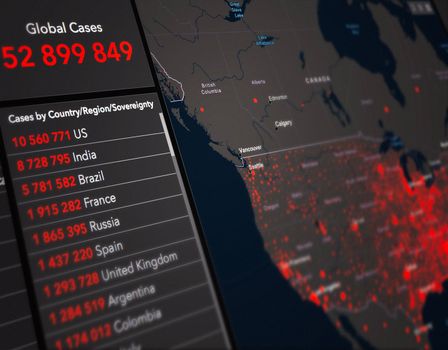
1. Facebook’s Friendship Map In 2010, a Facebook engineer created a global map by plotting friendship connections between cities. The result was a glowing, ethereal depiction of human relationships—a visualization that not only mapped connectivity but also revealed geopolitical boundaries and cultural clusters. 2. Enron Email Network Researchers analyzed over 500,000 emails from the Enron scandal, visualizing employee communications as a network. Central nodes represented influential executives, while clusters highlighted departmental silos. This analysis uncovered patterns of information flow and potential collusion, later used as evidence. 3. COVID-19 Contact Tracing During the pandemic, governments and health agencies visualized contact networks to track the spread of infections. By mapping who interacted with whom, they could quickly identify super-spreader events and critical transmission links, enabling targeted interventions. 4. Twitter Hashtag Campaigns Marketers often visualize retweet and mention networks to assess the reach and structure of social media campaigns. For instance, mapping the “#MeToo” movement’s spread on Twitter revealed central influencers, regional hubs, and the global resonance of the conversation.Essential Tips for Effective Social Network Visualizations
Creating insightful network visualizations is both an art and a science. Here are some proven strategies for making your social network analysis visually compelling and analytically powerful:
1. Simplify Where Possible Large networks (with thousands of nodes) can quickly become overwhelming—a phenomenon known as “hairball” visualizations. Use filters to focus on the most relevant nodes (e.g., those with the most connections or highest influence), or display only certain types of relationships. 2. Use Color and Size for Clarity Color-coding nodes by attribute (such as community, role, or sentiment) and sizing them by centrality (a measure of influence) helps viewers instantly distinguish important patterns. For example, in a corporate network, executives might appear as large, brightly colored nodes. 3. Leverage Interactivity Interactive tools allow users to explore networks dynamically—zooming, searching, and clicking to reveal more information. Platforms like D3.js, Sigma.js, or web-based tools such as Graph Commons make it easy to share complex networks with wide audiences. 4. Annotate Key Insights Highlighting or labeling critical nodes, clusters, or paths ensures that viewers don’t miss the story behind the data. Annotations can point out influential individuals, isolated groups, or noteworthy connections. 5. Mind the Ethics and Privacy Visualizing social networks often means dealing with sensitive personal data. Always anonymize private information and consider the potential implications of sharing network maps publicly, especially in health, legal, or workplace contexts.Comparing Visualization Tools for Social Network Analysis
Choosing the right tool is crucial for effective social network visualization. Here is a comparison of popular platforms, focusing on their features, ease of use, and best use cases:
| Tool | Best For | Ease of Use (1-5) | Interactivity | Notable Features |
|---|---|---|---|---|
| Gephi | Large, complex networks | 3 | Medium | Advanced layouts, modularity analysis, customizable visuals |
| NodeXL | Beginners, Excel users | 5 | Low | Excel integration, easy import/export, basic analytics |
| Cytoscape | Biological & scientific networks | 3 | Medium | Extensive plugins, network biology features |
| D3.js | Fully custom, web-based visuals | 2 | High | Highly customizable, supports animation & interactivity |
| Graph Commons | Collaborative, online mapping | 4 | High | Web-based, easy sharing, collaboration features |
For beginners or those working with smaller datasets, NodeXL’s integration with Excel makes it approachable. For large-scale or scientific networks, Gephi and Cytoscape offer powerful features. D3.js and Graph Commons are best for custom, interactive, or collaborative projects.
Common Pitfalls to Avoid in Network Visualization
While data visualization can unlock incredible insights, it’s important to sidestep common mistakes that can obscure or mislead:
1. Overcrowding Attempting to display every node and edge can result in illegible “hairballs.” Instead, aggregate data, use sampling, or segment your network for clarity. 2. Misinterpreting Centrality Not all central nodes are “leaders.” Centrality measures (like degree, betweenness, or eigenvector centrality) each tell a different story. For example, a node with high betweenness may act as a bridge, not necessarily as a top influencer. 3. Ignoring Directionality Many networks have directional links (e.g., who follows whom). Omitting direction can distort the analysis, especially in information flow or command structures. 4. Neglecting Time Static snapshots can hide temporal dynamics. Consider using animations or time-series views to reveal how networks change. 5. Failing to Validate Data Social network data is often messy or incomplete. Always check for duplicates, missing entries, and data consistency before visualizing.Future Directions: Advanced Visualization and AI Integration
As both social networks and visualization technologies evolve, new possibilities are emerging. Artificial intelligence and machine learning are being used to automatically detect communities, predict influential nodes, and even generate dynamic, real-time visualizations.
For example, Facebook uses AI-driven visual analytics to spot abnormal behavior patterns and misinformation networks. Meanwhile, researchers are experimenting with 3D and virtual reality (VR) visualizations, allowing users to “walk through” complex networks and interact with them spatially.
According to Gartner, by 2026, over 60% of advanced analytics workflows will incorporate AI-powered visualization techniques, dramatically enhancing the speed and depth of social network analysis.
Unlocking Insights: The Power of Visualization in Social Network Analysis
Data visualizations are more than just pretty pictures—they are essential tools for navigating the intricate, ever-expanding world of social networks. Whether you are tracing the spread of information across continents or uncovering hidden influencers in an organization, effective visualizations reveal patterns and insights that raw data alone cannot.
By choosing the right visualization technique, leveraging modern tools, and following best practices, anyone can transform complex network data into actionable intelligence. As technologies like AI and VR continue to advance, the future of social network analysis promises even deeper, more interactive explorations of our increasingly connected world.