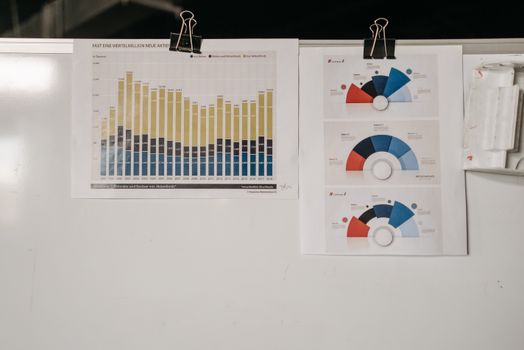
Data is everywhere, but making sense of it isn’t always easy—especially for those without a technical background. Businesses, nonprofits, educators, and governments increasingly rely on data visualizations to share findings and drive decisions. However, the most brilliant chart is useless if your audience can’t understand it. So, how do you create data visualizations that truly connect with non-experts? This article explores practical tips, design strategies, and communication tricks to help you turn raw data into clear, impactful visuals for everyone.
Understanding Your Audience: The First Step in Effective Visualization
Before you select chart types or colors, the most important question is: Who will see your visualization? Non-expert audiences vary widely in their familiarity with data, statistical concepts, and even basic chart types.
A 2022 Pew Research Center survey found that only 26% of U.S. adults could correctly interpret a scatterplot. Meanwhile, over 60% were comfortable with basic bar and line charts. This highlights a crucial point: many people may find common data visuals confusing or intimidating.
.png) Key steps to understanding your audience:
- Assess data literacy: Are viewers familiar with percentages, averages, or trends?
- Context matters: Are they making business decisions, learning in a classroom, or browsing on social media?
- Identify what matters: What questions do they want answered? What actions might they take based on your data?
Key steps to understanding your audience:
- Assess data literacy: Are viewers familiar with percentages, averages, or trends?
- Context matters: Are they making business decisions, learning in a classroom, or browsing on social media?
- Identify what matters: What questions do they want answered? What actions might they take based on your data?
By tailoring your visualizations to audience knowledge, you avoid alienating or overwhelming viewers.
Choosing the Right Visualization: Simple Over Complex
When it comes to non-expert audiences, clarity always beats complexity. While advanced visualizations like heat maps or network graphs are powerful, they can confuse those unfamiliar with them. Instead, focus on visuals that communicate data simply and quickly.
Here’s a comparison of popular chart types and their suitability for non-expert audiences:
| Chart Type | Best For | Non-Expert Suitability | Example Use |
|---|---|---|---|
| Bar Chart | Comparing categories | Excellent | Sales by product |
| Line Chart | Showing trends over time | Excellent | Website traffic by month |
| Pie Chart | Showing proportions | Good (if few categories) | Market share by company |
| Scatterplot | Correlations | Poor to Fair | Income vs. education |
| Heat Map | Density/Distribution | Poor | Website clicks by region |
Stick to bar, column, and line charts unless your audience has shown comfort with more advanced types. Remember: the goal is not to impress, but to inform.
Design Principles: Make It Intuitive
Great data visualization is as much about design as it is about data. Non-expert audiences benefit from visuals that are instantly readable, uncluttered, and guide the eye naturally.
Here are essential design tips for maximum clarity:
1. Limit the number of variables: Avoid cramming more than 3–5 data series into a single chart. 2. Use color with purpose: Use contrasting colors to differentiate categories, but avoid loud or clashing palettes. According to MIT research, viewers process color differences faster than shape or size differences. 3. Avoid “chart junk”: Gridlines, unnecessary icons, and heavy backgrounds distract from your message. Every element should serve a purpose. 4. Label clearly: Always label axes, categories, and key data points. Use plain language—replace “axis” with “side” or “bottom,” for example. 5. Use consistent scales: A 2021 Nielsen Norman Group study found that inconsistent axis scales were a top reason for misinterpretation among non-experts. 6. Add whitespace: Don’t fear empty space—it helps the eye focus.Simple design makes your visualization welcoming, not intimidating.
Storytelling: Turn Data Into a Narrative
Numbers alone rarely inspire action or understanding. Non-expert audiences benefit immensely from a clear narrative—one that explains what the data means and why it matters.
How to craft a narrative with your visualization: - Start with a question: What is the data trying to answer? (“How did sales change during the pandemic?”) - Highlight the key finding: Use color, annotations, or arrows to draw attention to the most important data point. - Add a headline: A strong, clear title summarizes the takeaway, e.g., “Sales Doubled in 2021 After Online Expansion.” - Use captions and annotations: Brief notes alongside the chart can guide viewers through the story. - Contextualize: Explain unusual spikes, drops, or outliers in plain language.In a 2023 Content Marketing Institute survey, 67% of marketers said that visuals paired with a narrative were twice as likely to be remembered by audiences than data alone. By telling a story, you make your visualization relatable and memorable.
Accessibility: Making Visualizations Inclusive
An often-overlooked aspect of data visualization is accessibility. Non-expert audiences include people with visual impairments, color blindness, or cognitive differences. Ensuring everyone can interpret your data is both an ethical and practical imperative.
Best practices for accessible data visualizations: - Use high-contrast color schemes and avoid red-green combinations (8% of men have some form of color blindness). - Provide text alternatives: Offer data tables or descriptive text beneath your chart. - Make fonts large and legible: Use at least 12pt font for labels and titles. - Add interactive features: Allow users to hover over data points for more information, or zoom in on details (this is especially useful for digital presentations). - Test with real users: Gather feedback from people outside your field to spot confusing elements.The World Wide Web Consortium (W3C) provides detailed guidelines for accessible graphics; following them ensures your insights reach the widest possible audience.
Testing and Iterating: Gathering Feedback for Improvement
No visualization is perfect on the first try. The most effective way to ensure clarity is to test your charts with real non-expert users. Even a quick feedback session can reveal blind spots or confusion.
How to test your visualization: - Conduct “think-aloud” sessions: Ask someone to describe what they see and understand as they view your chart. - Look for hesitation or confusion: If viewers pause or ask basic questions, your visualization may need simplification. - Track time-to-understanding: Ideally, key insights should be apparent within 5 seconds. - Iterate: Refine based on feedback—sometimes a small tweak, like a clearer label or fewer colors, makes a big difference.According to a 2022 survey by Data Visualization Society, teams that tested their visuals with non-experts reported a 40% increase in successful communication of key messages.
Final Thoughts on Creating Data Visualizations for Non-Experts
Data visualizations have the power to bridge gaps in understanding, but only if they are crafted with the audience in mind. By focusing on clarity, simplicity, and storytelling, you can transform complex data into visuals that inform, engage, and inspire action—even among those without technical backgrounds.
Remember: the most impactful visualizations are not necessarily the flashiest, but the ones that help everyone see the story in the data. Start with your audience, choose the right chart, design for clarity, weave a narrative, prioritize accessibility, and always test your work. These principles will help you communicate insights that resonate beyond the world of data experts.