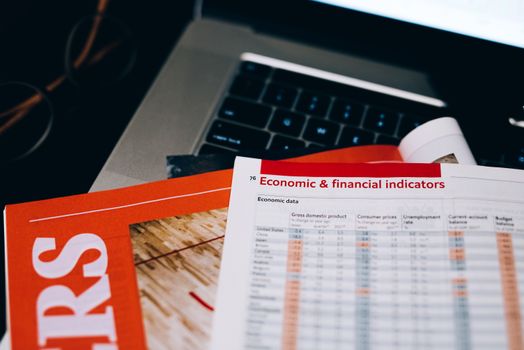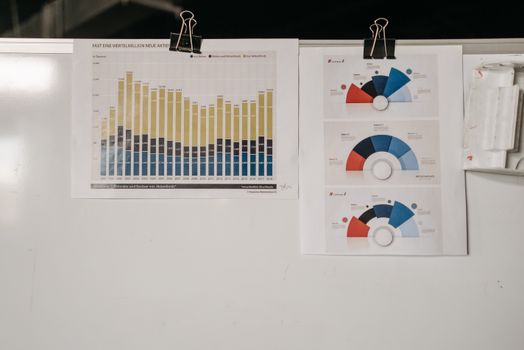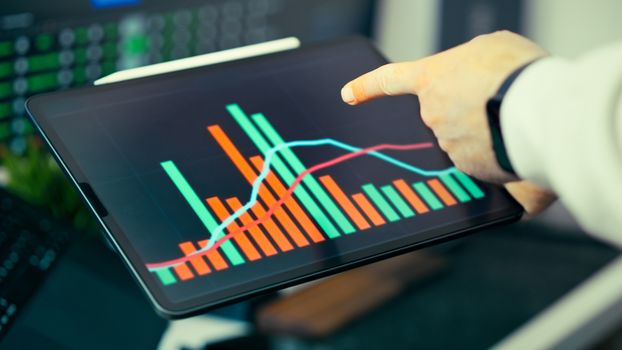
Data shapes the world of finance and investments. From high-frequency trading firms analyzing billions of market data points per second to individual investors tracking their portfolios, the ability to interpret complex financial information is vital. But raw numbers and spreadsheets, even in the hands of experts, can only go so far. This is where data visualization steps in as a transformative force. Powerful visualizations—charts, graphs, dashboards, and interactive tools—not only clarify complex data but also profoundly influence the way financial decisions are made.
This article explores how data visualization affects decision-making in finance and investments, examining its psychological impact, real-world uses, advantages over traditional reporting, common pitfalls, and the technology driving innovation in the field.
The Psychological Impact: How Visuals Shape Financial Decisions
The human brain is wired for visual processing. According to MIT, the brain can process images in as little as 13 milliseconds—far faster than it can read and comprehend lines of text or columns of numbers. In the context of finance, where data is dense and time is of the essence, visualizations help users spot trends, correlations, and anomalies almost instantly.
.png)
Behavioral finance research supports this. A 2021 study published in the Journal of Behavioral and Experimental Finance found that investors who used interactive visual dashboards were 28% more likely to accurately identify risk patterns than those relying on traditional reports. The visuals made it easier to recognize outliers, shifts in volatility, and the impact of news events.
Visualizations also combat common cognitive biases:
- $1 Line charts and heatmaps can help investors avoid overreacting to the latest data point by providing context. - $1 Visual benchmarks and comparisons reduce the tendency to fixate on a single value. - $1 Interactive tools that display uncertainty (such as confidence intervals) encourage more cautious, informed decisions.By presenting information in a visually accessible format, data visualization helps finance professionals and investors make choices that are not only faster, but also more rational and data-driven.
Real-World Applications: Data Visualization in Action
Financial institutions and investors leverage data visualization in nearly every aspect of their work. Here are some practical examples of how visual tools drive better decision-making:
$1
Modern portfolio platforms use real-time charts and allocation wheels to show asset distribution, performance over time, and risk exposure. For example, Fidelity’s Active Trader Pro uses custom heatmaps to help investors instantly spot underperforming sectors in their portfolios.
$1
Banks use scenario analysis dashboards to visualize the impact of market shocks. During the 2020 pandemic, major institutions like JPMorgan Chase used data visualization tools to model potential losses under various economic conditions, helping them adjust lending and investment strategies proactively.
$1
Interactive candlestick charts and volume histograms allow traders to see price action and liquidity at a glance. Visualization tools like Bloomberg Terminal provide overlays of technical indicators—moving averages, Bollinger Bands, relative strength index—helping professionals make rapid buy, sell, or hold decisions.
$1
Data visualization isn’t just for trading. Compliance teams use network graphs to track suspicious transactions and identify potential money laundering patterns. For example, HSBC implemented a visualization-driven monitoring system that reduced false positives in fraud detection by 40%.
$1
Companies use clear, compelling visuals in quarterly earnings releases and investor presentations. According to a 2022 PwC report, 68% of institutional investors say they trust earnings data more when it is supplemented by interactive dashboards and infographics, rather than dense tables alone.
Data Visualization vs. Traditional Reporting: A Comparative View
How does data visualization stack up against traditional financial reporting methods—such as static tables or text-heavy documents? The following comparison table highlights key differences:
| Aspect | Traditional Reporting | Data Visualization |
|---|---|---|
| Speed of Insight | Slow; requires reading and manual analysis | Fast; trends and anomalies pop out instantly |
| Accessibility | Challenging for non-experts | User-friendly for all audiences |
| Depth of Analysis | Limited by static views | Interactive and multi-dimensional |
| Risk of Misinterpretation | High; easy to overlook key patterns | Lower; visual cues highlight critical points |
| Engagement | Low; can be tedious and overwhelming | High; encourages exploration and discovery |
| Decision Quality | Prone to bias and error | Supports more objective, data-driven choices |
This comparison underscores why leading investment firms and financial institutions have invested heavily in visualization platforms. According to Gartner, global spending on analytics and visualization software exceeded $23 billion in 2023—a 15% increase from the previous year.
Common Pitfalls: When Financial Visualizations Go Wrong
While data visualization offers clear advantages, it is not infallible. Poorly designed visuals can mislead, confuse, or even create new risks in financial decision-making.
$1
Reducing complex data to a single chart can obscure important details. For example, representing a diverse portfolio with just a pie chart may hide concentration risk in correlated assets.
$1
Selective time frames or data points can paint a misleading picture. A bar chart showing a fund’s recent performance might ignore a longer history of volatility.
$1
Manipulating chart axes can exaggerate or understate changes. For instance, a stock price chart with a truncated Y-axis may make minor fluctuations look dramatic, triggering unnecessary alarm or excitement.
$1
Cramming too many indicators or data series into one visualization can overwhelm users. Research shows that decision accuracy drops by up to 50% when individuals are presented with more than six variables at once.
$1
Without proper labels, annotations, or data sources, visualizations can be misinterpreted. Transparency and context are essential for trust.
To mitigate these risks, financial organizations are adopting best practices—such as standardized templates, clear labeling, and regular user testing—to ensure their visualizations inform rather than mislead.
Technology and Innovation: The Future of Financial Data Visualization
The field of financial data visualization is evolving rapidly, driven by advances in artificial intelligence, big data, and cloud computing.
$1
AI algorithms can sift through vast financial datasets, surfacing patterns and anomalies that are then visualized for human interpretation. For example, robo-advisors like Betterment use AI-driven dashboards to recommend portfolio adjustments in real time, based on market shifts and user goals.
$1
Cloud-based platforms, such as Tableau and Microsoft Power BI, enable real-time data streaming and interactive exploration. In 2023, over 60% of Fortune 500 financial companies reported deploying cloud-based visualization solutions for faster, more collaborative decision-making.
$1
With more investors trading on smartphones, mobile-optimized visualizations are essential. Apps like Robinhood and E*TRADE provide intuitive, touch-friendly charts that make it easy to monitor markets and act on insights anywhere, anytime.
$1
Visualizations now incorporate non-traditional data—such as social sentiment, satellite imagery, and economic indicators—helping investors gain an edge. For instance, hedge funds use heatmaps of social media activity to anticipate market-moving events before they hit the news.
As these technologies mature, expect financial visualizations to become even more predictive, personalized, and immersive—perhaps incorporating augmented or virtual reality for deeper exploration.
Final Thoughts: The Transformative Power of Visualization in Finance
Data visualization has fundamentally changed the way decisions are made in finance and investments. By turning overwhelming streams of numbers into clear, actionable insights, visualization tools empower everyone from Wall Street professionals to individual investors.
The benefits are clear: faster insights, reduced bias, improved risk management, and more effective communication. However, harnessing these advantages requires mindful design, transparency, and ongoing adaptation to new technologies.
In a landscape where fortunes can be made or lost in seconds, the ability to see—not just analyze—data is more critical than ever. As financial markets grow more complex, data visualization will remain an indispensable ally in making smarter, more confident investment decisions.