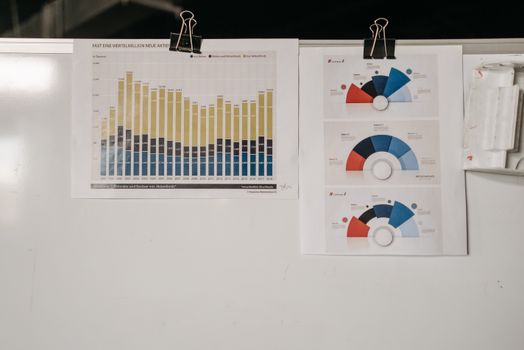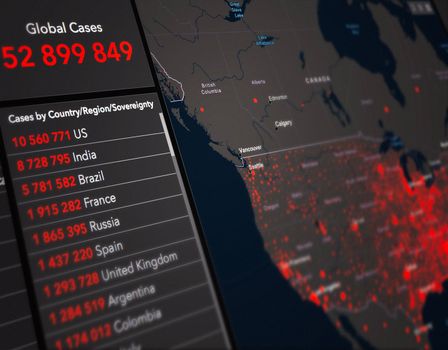
Data visualization has rapidly become an essential skill in today’s information-driven world. From business reports to public health dashboards, well-crafted visuals can clarify complex information, highlight trends, and drive important decisions. Yet, even with powerful visualization tools at our fingertips, many visualizations fall short due to avoidable mistakes. These errors can mislead audiences, obscure valuable insights, or even undermine trust in the data itself. Understanding the most frequent pitfalls—and how to sidestep them—can dramatically improve the impact and accuracy of your data storytelling.
The Hidden Costs of Poor Data Visualization
Bad data visualization isn’t just a minor inconvenience. According to a 2020 study by the Harvard Business Review, companies that misinterpret data due to poor visualization practices are 60% more likely to make flawed strategic decisions. In the public sector, a misrepresented COVID-19 chart in early 2020 led to widespread confusion and mistrust—a potent reminder that visual clarity isn’t just aesthetic, but crucial for informed action.
Common mistakes can cause viewers to misunderstand the data, draw incorrect conclusions, or overlook key findings. This is especially critical as business intelligence grows: Gartner estimated that, globally, organizations spent over $30 billion on analytics and business intelligence software in 2023. Without effective visualization, much of this investment risks being wasted.
.png)
Mistake #1: Overcomplicating Visuals with Irrelevant Elements
One of the most persistent errors in data visualization is cluttering charts with unnecessary elements. Overuse of colors, 3D effects, decorative icons, or excessive gridlines can distract viewers from the actual message. According to research from the Nielsen Norman Group, users comprehend information 25% faster with clean, simple visuals compared to those overloaded with extraneous details.
For example, 3D pie charts or bar charts may look impressive but often distort proportions, making it difficult to accurately compare values. Similarly, charts with too many data series, labels, or annotations quickly become overwhelming. A case study from a financial services firm found that simplifying their dashboards—reducing chart types from 8 to 3 and eliminating non-essential graphics—led to a 40% increase in user satisfaction and a 35% reduction in interpretation errors.
How to avoid this mistake: - Stick to two or three colors per chart. - Use 2D charts and avoid decorative 3D effects. - Minimize gridlines, labels, and annotations to only what’s necessary. - Focus each visualization on a single key message.Mistake #2: Misleading Scales and Axes
A subtle but serious problem arises when axes are manipulated, either intentionally or accidentally. Truncated y-axes, inconsistent intervals, or non-zero baselines can exaggerate or minimize differences between data points. For instance, a 2019 analysis by the Pew Research Center showed that nearly 15% of publicly shared charts on social media used axes that skewed the story the data told.
Consider a bar chart comparing sales over two years. If the y-axis starts at 90 instead of zero, a modest 5% increase can appear as a dramatic spike. The same goes for logarithmic scales, which are appropriate for exponential data but confusing for linear trends.
Comparison Table: Common Axis Errors vs. Best Practices
| Axis Error | Example | Impact | Best Practice |
|---|---|---|---|
| Truncated Y-Axis | Y-axis starts at 90 instead of 0 | Exaggerates changes and misleads viewers | Always start axes at zero for bar charts |
| Inconsistent Intervals | Intervals of 10, then 50, then 100 | Makes trends appear uneven or distorted | Use uniform intervals across axes |
| Improper Use of Log Scales | Log scale for non-exponential data | Obscures actual trends | Only use log scales for data spanning large orders of magnitude |
Mistake #3: Poor Color Choices and Accessibility Issues
Color is a powerful tool in visualization, but it can be easily misused. The wrong palette can make charts unreadable or even exclude viewers with color vision deficiencies. According to the World Health Organization, approximately 1 in 12 men and 1 in 200 women worldwide are colorblind, most commonly red-green colorblind.
Problems arise when similar colors are used for different data series, or when color is the only distinguishing factor. For example, using shades of red and green to signal profit and loss may seem intuitive, but it renders charts incomprehensible for those with colorblindness. In 2022, a survey conducted by Datawrapper found that 35% of users had difficulty distinguishing between similar shades in online charts.
How to avoid this mistake: - Use colorblind-friendly palettes (such as those from ColorBrewer). - Differentiate data series with patterns, labels, or icons in addition to color. - Test your visualizations using colorblind simulators. - Ensure sufficient contrast between foreground and background elements.Mistake #4: Ignoring Context and Data Source Transparency
Effective visualization is not just about the chart itself—it’s also about providing the necessary context. Failing to supply key details such as data sources, units of measurement, or the time frame can leave viewers confused or skeptical. Inaccurate or missing legends, unclear axis labels, or ambiguous titles can all erode trust.
A report by the Data Visualization Society in 2023 revealed that 28% of business users felt they could not fully trust visualizations because of missing context or unclear sourcing. This lack of transparency can have real-world consequences; for example, a misleading infographic about climate change data in 2018 was widely criticized for omitting time frames and data sources, leading to public misinformation.
How to avoid this mistake: - Always cite data sources directly on or below the chart. - Include clear titles, axis labels, and legends. - Provide context about the data (e.g., time period, geographic scope). - Add footnotes or links for further information when necessary.Mistake #5: Choosing the Wrong Chart Type
Selecting the wrong chart type for your data can obscure rather than illuminate your message. A line chart is great for trends over time, but not for category comparisons; pie charts are often misused to compare too many segments, making it hard to interpret. According to a 2021 Tableau user study, 42% of surveyed professionals admitted to struggling with choosing the right chart type at least once a month.
For example, using a pie chart to show market share among 12 competitors creates a visual that is hard to read, while a bar chart would allow for easier comparison. Similarly, displaying categorical data on a scatter plot can confuse viewers.
How to avoid this mistake: - Use bar charts for comparing categories. - Use line charts for time series or trends. - Use scatter plots to display relationships between two numerical values. - Avoid 3D charts and overly complex visualizations unless absolutely necessary.Final Thoughts on Avoiding Data Visualization Mistakes
Data visualization is both an art and a science. While the proliferation of tools has made it easier to create charts and graphs, the fundamentals of effective visual storytelling remain the same. Avoiding common mistakes—notably overcomplicating visuals, misusing axes, poor color choices, missing context, and choosing the wrong chart type—can vastly improve the clarity, trustworthiness, and impact of your visualizations.
By focusing on your audience’s needs, maintaining transparency, and adhering to best practices, you can turn raw data into actionable insights. Remember: a great chart doesn’t just look good—it tells the right story, clearly and accurately.