The Impact of Colors on Data Visualization Interpretation
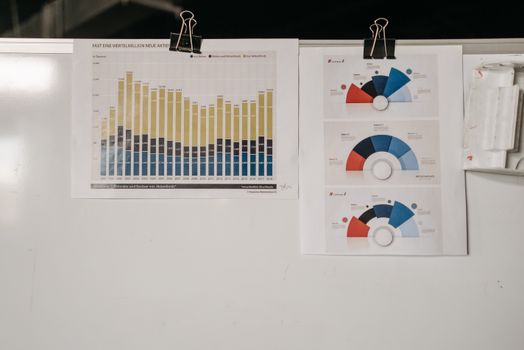
Color is one of the most powerful tools in the data visualization toolbox. From eye-catching dashboards to intricate scientific plots, color choices do much more than make graphics attractive—they profoundly influence how viewers understand, interpret, and act on the information presented. Yet, the impact of colors in data visualization is often underestimated or misunderstood, leading to misinterpretations, confusion, or even biased conclusions. This article dives deep into the science, psychology, and best practices of color use in data visualization, highlighting how thoughtful color selection can elevate understanding and drive better decisions.
The Science Behind Color Perception in Data Visualization
Human perception of color is a complex process involving both our eyes and brains. The human eye can distinguish about 10 million different colors, but our ability to interpret meaning from color varies widely based on context, culture, and even biology.
Studies have shown that color can increase attention and recall. According to a 2018 review published in "Frontiers in Psychology," color visuals increase willingness to read by up to 80% and improve comprehension and retention by up to 73% compared to black-and-white visuals. The reason lies in how our brains process color: certain hues can evoke emotional responses, signal importance, or group related information instantly.
.png)
However, color perception is not universal. Up to 8% of men and 0.5% of women have some form of color vision deficiency (commonly called color blindness), which complicates interpretation for a significant segment of the population. Furthermore, cultural associations—such as red symbolizing danger in Western cultures but prosperity in others—can affect the interpretation of colors in data.
Color’s Role in Enhancing or Impairing Data Interpretation
The primary function of color in data visualization is to communicate information efficiently and accurately. When used wisely, color can:
- Highlight key data points or trends - Differentiate between categories - Indicate value ranges (gradients) - Create visual hierarchiesPoor color choices, however, can lead to confusion or misinterpretation. A famous example is the use of the "rainbow color map" (often seen in scientific or medical imaging), which can distort data perception and mislead viewers. Research from the IEEE Transactions on Visualization and Computer Graphics found that rainbow color maps can cause viewers to see false boundaries or patterns due to abrupt color changes that don't correspond to the data's underlying structure.
In 2019, an experiment by the data visualization firm Juice Analytics demonstrated that users were 64% more likely to correctly interpret bar charts when a simple, logical color palette was used instead of an arbitrary or overly complex one. These results underscore the importance of clarity and intentionality in color choices.
How Different Color Schemes Influence Data Understanding
Color schemes in data visualization generally fall into three categories: sequential, diverging, and categorical. Each serves a distinct purpose and impacts interpretation differently.
| Scheme Type | Best Used For | Typical Colors | Interpretation Impact | Example |
|---|---|---|---|---|
| Sequential | Ordered data (e.g., temperature, sales) | Gradients (light to dark) | Shows magnitude or progression | Heatmaps, population density |
| Diverging | Data with a critical midpoint (e.g., profit/loss) | Two contrasting hues with a neutral center | Highlights deviation from the center value | Financial gains vs. losses |
| Categorical | Distinct groups or categories | Multiple distinct colors | Emphasizes separation of categories | Pie charts, bar charts by region |
Selecting the wrong color scheme can lead to misinterpretation. For example, using a sequential palette for categorical data may suggest an unintended order or ranking, confusing the audience.
Psychological and Emotional Effects of Color Choices
Colors don’t just convey data—they also evoke emotions and behaviors. Marketers and designers have long capitalized on color psychology to influence purchasing decisions, and similar principles apply in data visualization.
- Red is often associated with urgency, danger, or loss, making it a popular choice for highlighting negative trends or warnings. - Green typically signals growth, safety, or success. - Blue conveys calmness and reliability, which is why it’s frequently used in corporate dashboards.But context is everything. For instance, in a financial dashboard, red for losses and green for gains is intuitive in the U.S. and Europe, but in China, red often signifies prosperity and positive outcomes.
A 2017 survey by the Nielsen Norman Group found that 39% of users made faster and more accurate decisions when color cues matched their cultural and contextual expectations. Hence, understanding your audience’s background is critical for effective color use.
Accessibility: Making Colorful Visualizations Work for Everyone
Color vision deficiency affects millions of people worldwide. The most common type is red-green color blindness, making it difficult to distinguish between these hues. Inaccessible color choices can exclude a significant audience and potentially result in misinterpretation.
The Web Content Accessibility Guidelines (WCAG) recommend ensuring sufficient contrast between colors and not relying solely on color to differentiate information. Tools like ColorBrewer and Adobe Color provide palettes that are both aesthetically pleasing and accessible.
For instance, instead of using red and green to represent two categories, consider combining color with patterns, shapes, or labels. According to a 2021 study in "Information Visualization," combining color with redundant encoding (such as shape or label) increased task accuracy for color-blind users by over 40%.
Real-World Examples: Successes and Pitfalls of Color Use
Successful use of color in data visualization can be seen in projects like John Snow's 1854 cholera map, which used distinct colors to trace the source of an outbreak, revolutionizing public health. Today, companies like Spotify and Google use carefully chosen color palettes in their analytics dashboards to enhance clarity and user engagement.
Conversely, poor color choices have led to notable failures. A 2016 incident involved a weather map where critical hurricane warnings were depicted in shades of yellow and green, making it difficult for viewers—especially those with color vision deficiencies—to discern life-threatening conditions. The result: widespread confusion and public criticism.
These examples illustrate that color decisions are not merely aesthetic—they can have real-world consequences for understanding and action.
Best Practices for Effective Color Use in Data Visualization
To harness the full power of color in data visualization, consider the following best practices, supported by research and expert consensus:
1. $1: Choose color schemes that match the data type (sequential for ordered, categorical for groups, diverging for bipolar data). 2. $1: Use as few colors as necessary. Studies show that most people can reliably distinguish 7-10 different colors. 3. $1: Guarantee sufficient contrast between colors for readability, especially for text and small elements. 4. $1: Use tools to simulate color blindness and adjust palettes as needed. 5. $1: Combine color with other visual cues like shapes, patterns, or annotations. 6. $1: Apply colors consistently across related visuals to build intuitive understanding. 7. $1: Research your audience to avoid misinterpretation due to cultural color meanings.Following these principles not only improves comprehension but also builds trust and credibility with your audience.
Final Thoughts on the Impact of Colors on Data Visualization Interpretation
Color is far more than a decorative element in data visualization—it is a powerful communicator that shapes how insights are perceived, understood, and acted upon. When used strategically, color enhances clarity, directs attention, and makes complex data accessible. When misapplied, it can mislead, confuse, or even exclude users.
As data continues to drive decision-making in every sector, understanding and leveraging the impact of colors in data visualization is no longer optional—it's essential. By combining scientific insight, psychological awareness, and accessibility best practices, data designers can create visuals that inform, persuade, and inspire action for everyone.